← Back to Novel Tech Partner
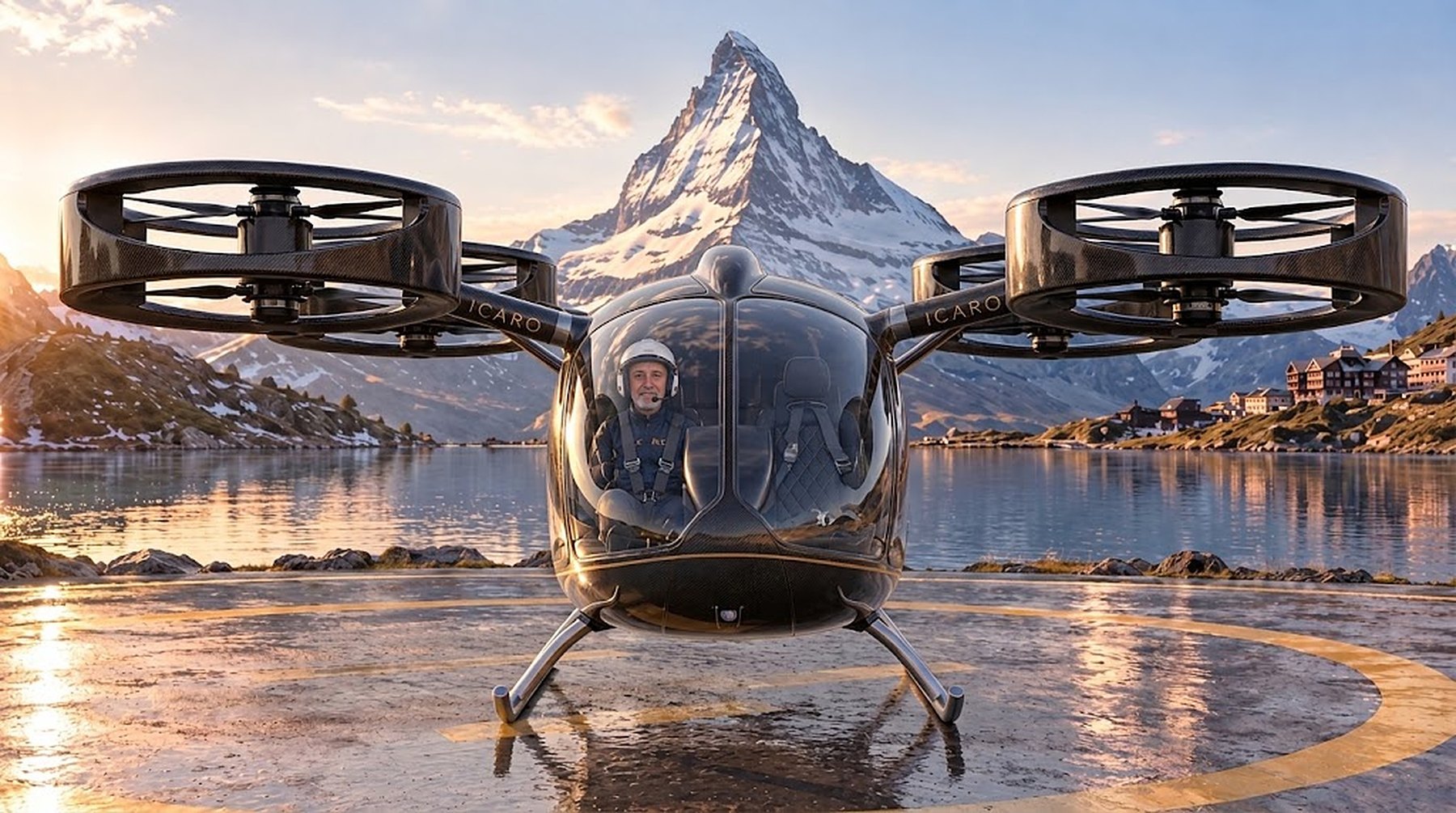
The founder at the controls
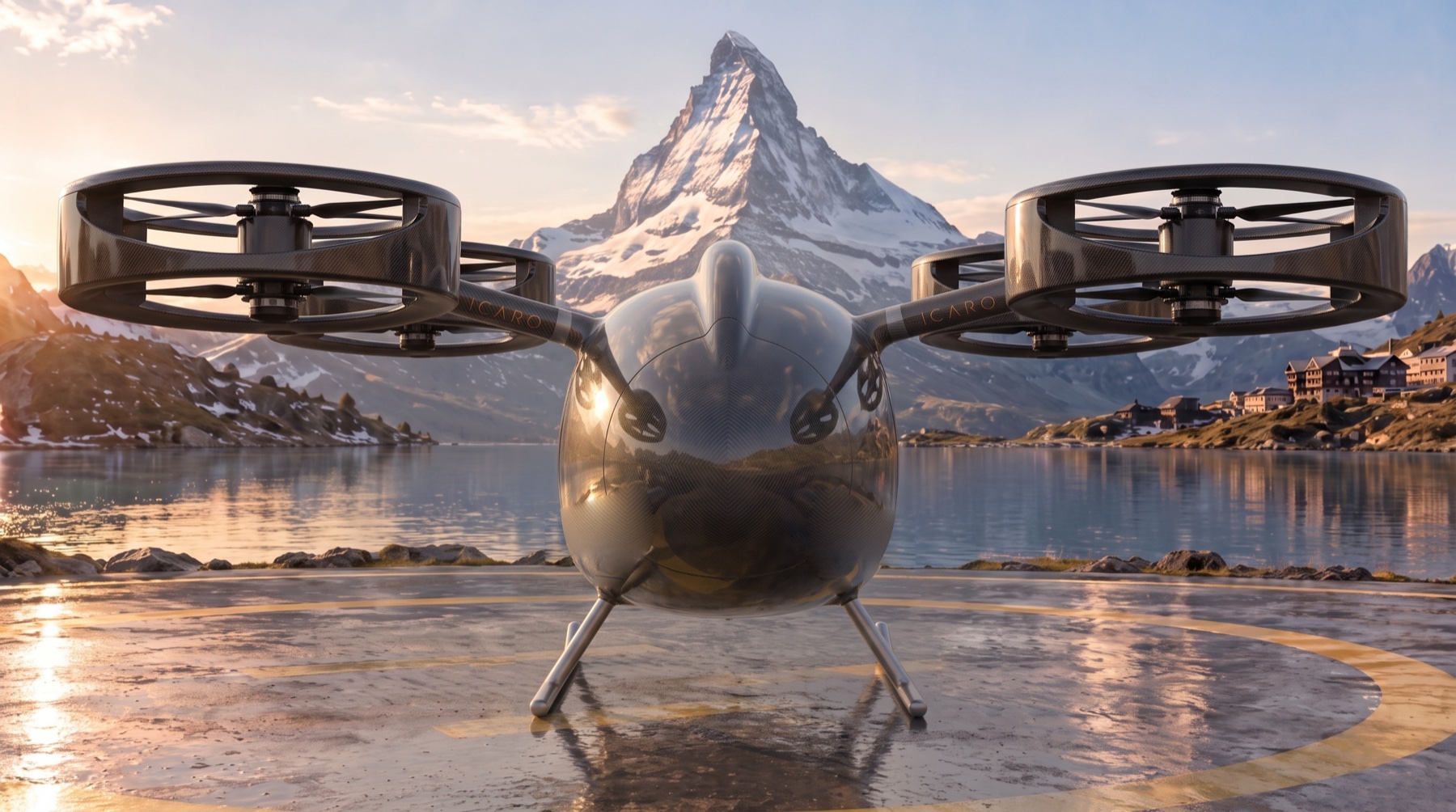
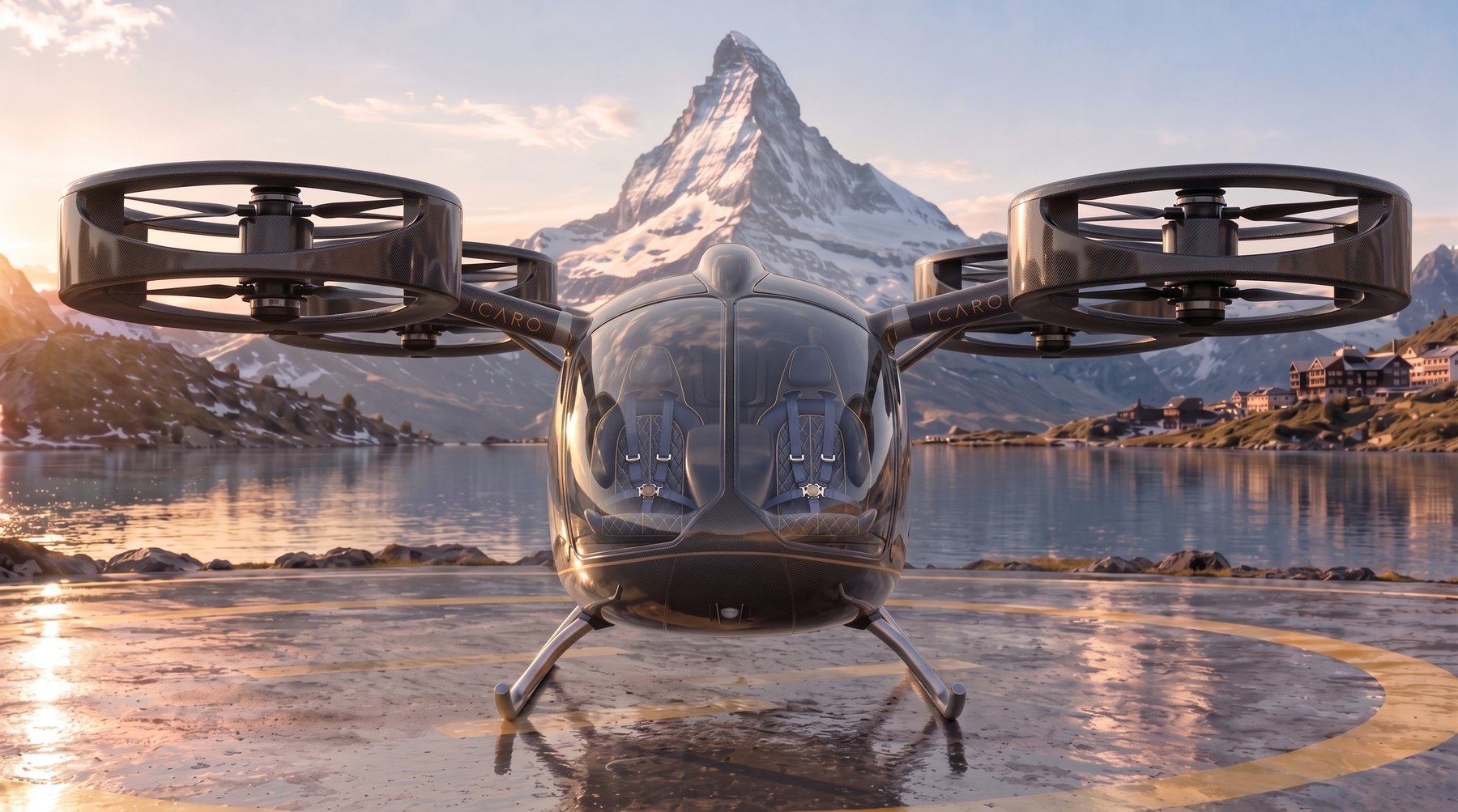
Front, empty cabin
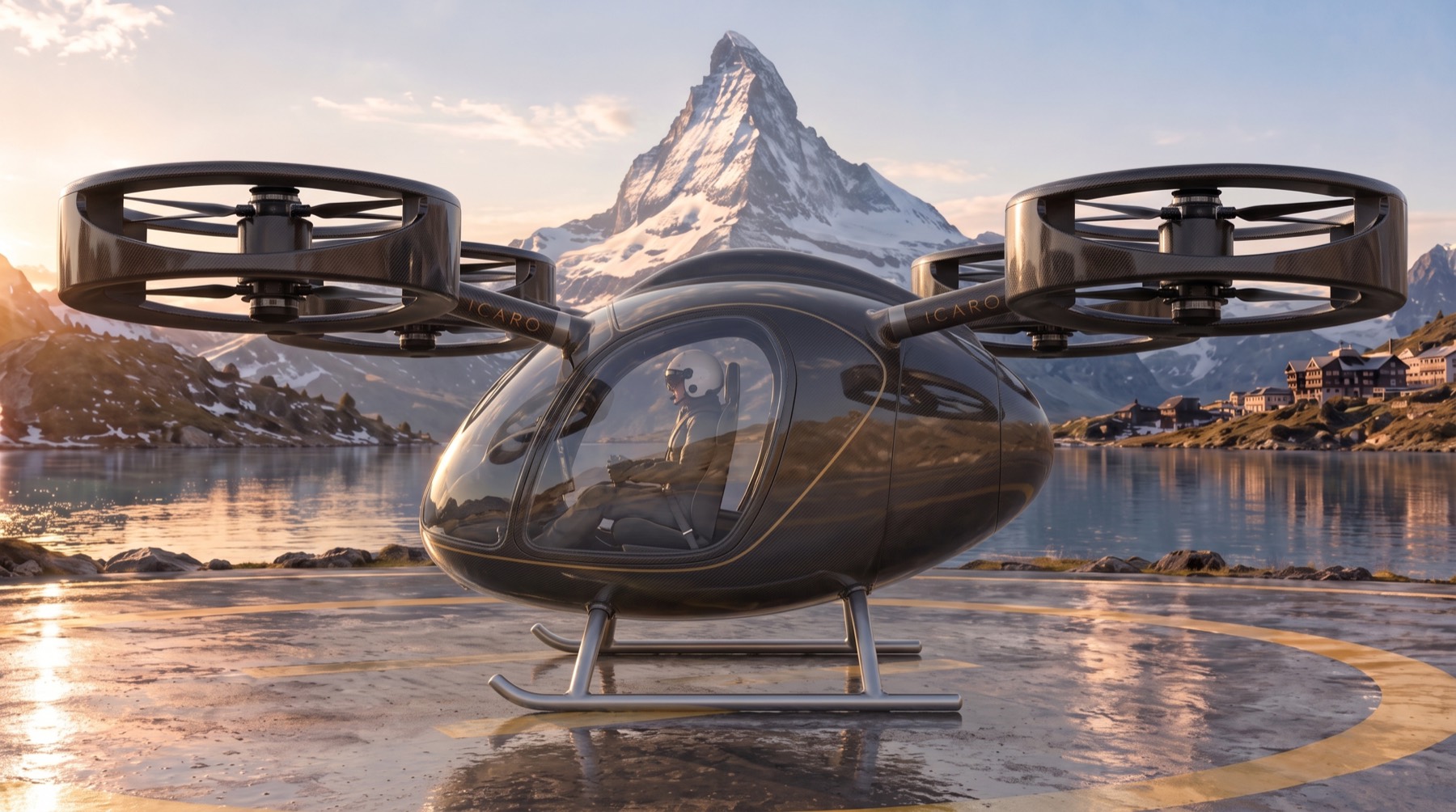
Side
Rear, from above
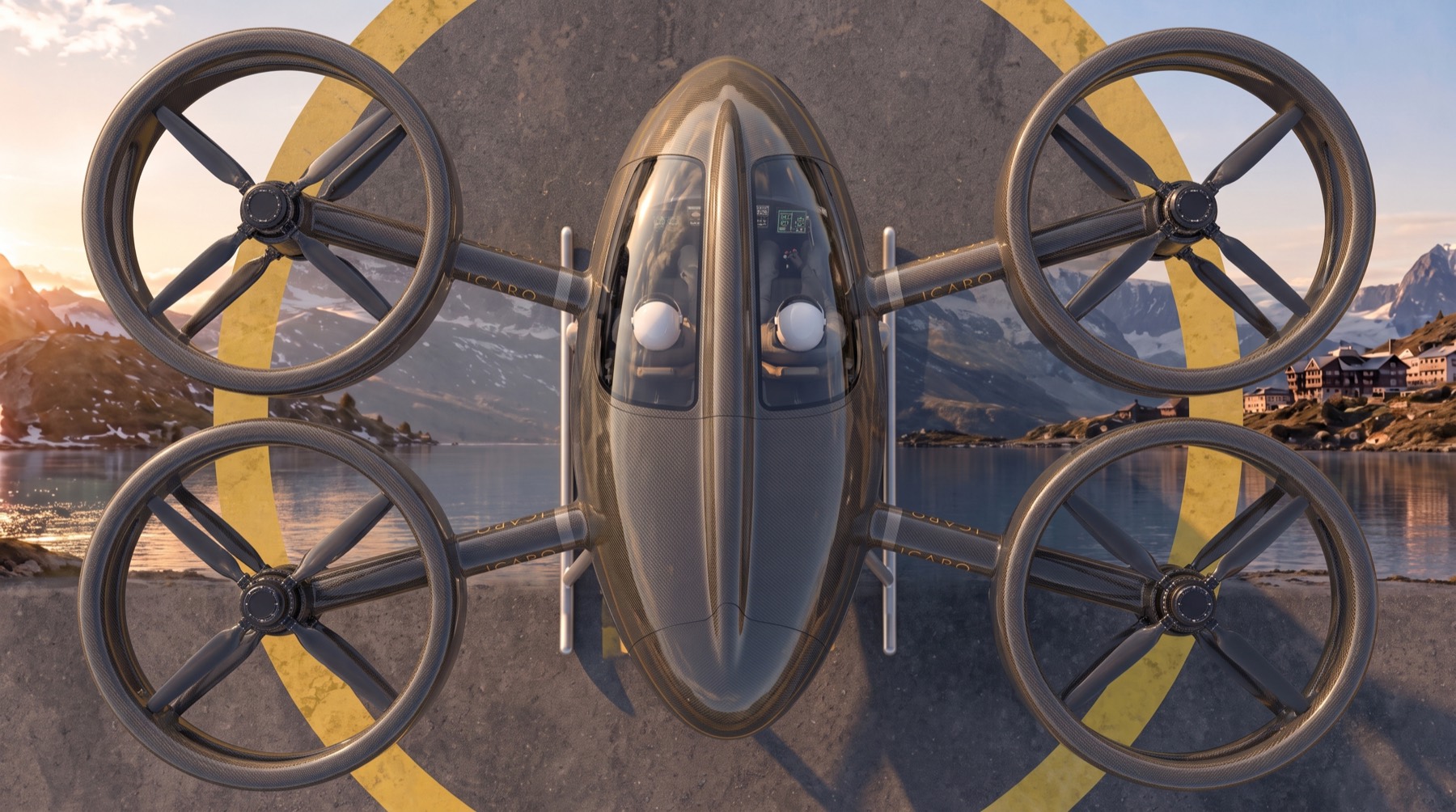
Top view
The cabin
Electric eVTOL · single- and two-seat · designed and built in Italy

ICARO

An electric vertical take-off and landing aircraft for sport recreational flying: light, simple, built with off-the-shelf components and a carbon-fibre airframe.

Discover the project Let's talk
ElectricVertical take-off8 motorsCarbon airframeTwo seatsMade in Italy
The project

Flying light, with what the market already offers

Electric, vertical take-off

Four rotor units, each with two coaxial propellers and two motors: eight independent electric motors, with a redundancy no helicopter has. No tail rotor, no mechanical transmission.

Off-the-shelf components

Motors, batteries, controllers, autopilot and ballistic parachute chosen from established suppliers' catalogues and integrated on an airframe designed in Italy. Less development from scratch, more reliability, predictable timing.

Sport recreational flying

ICARO is born in the ultralight category: single-seater up to 300 kg and two-seater up to 600 kg at take-off. An aircraft to fly, not a flying taxi: no passenger-transport promise.

The chosen design

A carbon bubble, four rings, eight motors

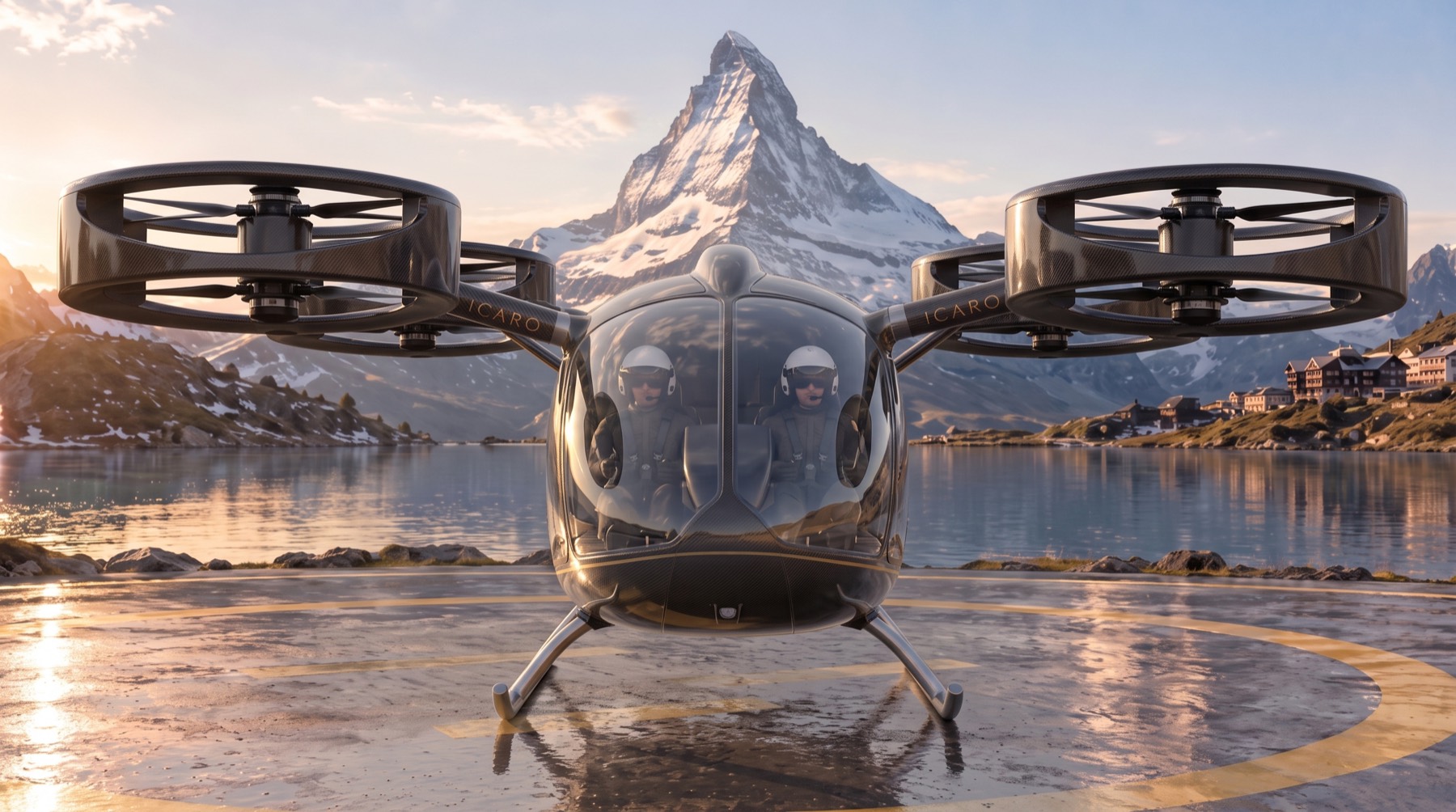
ICARO two-seater — front view
ICARO two-seater — side view ICARO two-seater — top view ICARO two-seater — front, empty cabin

The airframe is a carbon-fibre monocoque with a glazed bubble cockpit and a load-bearing spine from which the four arms extend. Each arm carries an open double-ring rotor unit: two coaxial propellers, two motors and a light guard that adds no weight to speak of.

The propellers sit above the cabin, as on a helicopter, and the four rotors are large and close to the fuselage: more thrust for the same power and a compact footprint. Skids, a ballistic parachute and dual navigation complete the design.

The two-seater is the reference model; the single-seater is its more compact derivative and opens the flight programme.

Concept renderings of the ICARO two-seater, September 2026
The cabin

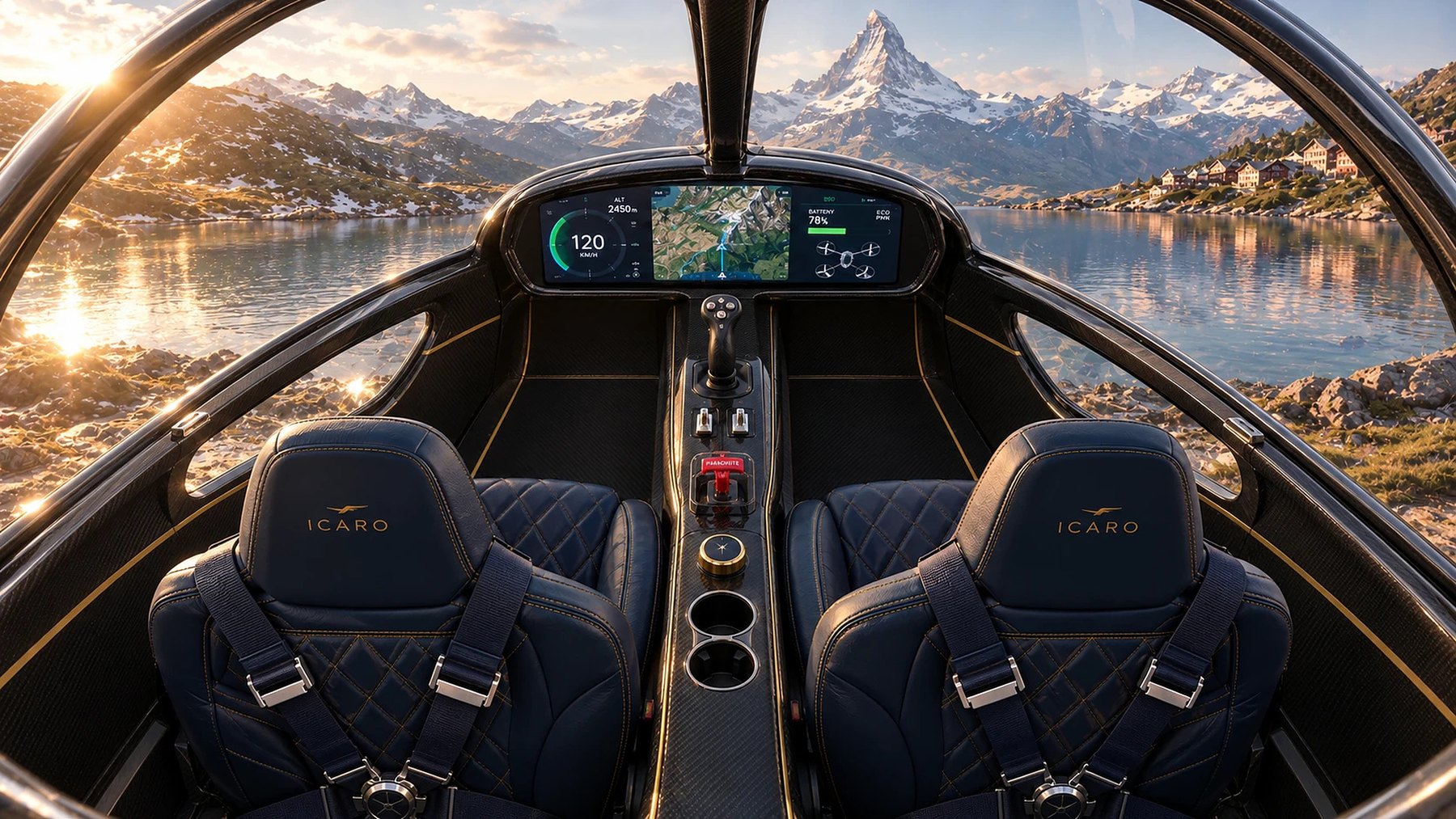
Simple luxury: two seats, one display, the sky all around

Two side-by-side seats in quilted navy leather with gold stitching, five-point harnesses, a carbon centre console with the joystick, two switches and the parachute handle. One single curved display in front of the pilots: altitude, speed, battery, map. Nothing else.

The windshield is in two panes, split by the central carbon pillar that rises into the backbone; the doors have a thin frame with a bar at elbow height, and the cabin belt line is carbon with the gold pinstripe. Inside, the same logic as outside: light, clean, no wires in sight.

Concept rendering of the cabin, top view, September 2026

ICARO — the cabin seen from above: two seats, carbon console, one display
The numbers

Preliminary design data

Single-seaterTwo-seater
CategoryUltralight, up to 300 kgUltralight, up to 600 kg
Propulsion8 electric motors, 4 coaxial rotors8 electric motors, 4 coaxial rotors
Footprint≈ 4.0 × 4.7 m≈ 3.9 × 4.9 m
Height≈ 2.3 m≈ 2.3 m
Maximum take-off mass≈ 300 kg≈ 495 kg
Target endurance15–20 minutes15–20 minutes
StructureCarbon monocoque airframe, carbon tubular arms, double-ring rotor units
SafetyRedundancy across eight motors, ballistic parachute, dual satellite navigation

Design values, computed on catalogue components and a reference geometry. They will be verified in the study phase and with the demonstrator. The stated endurance is deliberately conservative.

ICARO two-seater — side view

Side view of the chosen design

The gallery

ICARO from every side

ICARO — front, with the founder at the controls
Front, the founder at the controls
ICARO — front, empty cabin
Front, empty cabin
ICARO — side
Left side
ICARO — rear view from above, the four rotors
Rear from above, the four rotors
ICARO — top view
Top view
ICARO — the cabin
The cabin

Concept renderings of the ICARO two-seater, September 2026. The final design will come from the engineering study.

The founder

The first to fly it

Bruno Farnesi in the ICARO cockpit

Bruno Farnesi, founder of Zannini Group, was a helicopter pilot in the Italian Navy. He will be the first to take ICARO into the air: the programme comes from someone who knows from the inside what taking off vertically means.

Concept images with the founder, September 2026

The programme

Four steps, from paper to sky

1
2027

Study and demonstrator

Architecture review with a polytechnic university, final sizing and a ground demonstrator for motors, batteries and control.

2
2027 – 2028

Single-seater

Construction of the single-seat prototype, ground tests, first tethered and then free flights, registration in the ultralight category.

3
2028 – 2029

Two-seater

The reference model: same architecture, larger airframe, eight motors, two side-by-side seats under the bubble.

4
from 2030

Small series

Small-series production in Italy for private pilots and flight schools, with support and catalogue spare parts.

Who flies it first

The test pilot is the founder

Bruno Farnesi, founder of Zannini Group, was a helicopter pilot in the Italian Navy. The ICARO flight programme comes from someone who spent years at the controls and knows from the inside what taking off vertically means.

How it is organised
Zannini Group LLCFamily holding · Wyoming, USA
Icaro Inc.Planned project company · Delaware, USA · raises the capital
Built in ItalyGroup operating company · design, prototypes, small series
Partners and investors

A project open to those who want to build it with us

We are looking for technology partners, component suppliers, universities and qualified investors. The full technical dossier, with bill of materials, budget and schedule, is available on request under a confidentiality agreement.

Write to info@noveltechpartner.com Novel Tech Partner
← Back to Novel Tech Partner